
In this article
Many people choose human-hair extensions for two reasons: they last longer, and they blend seamlessly with natural hair. But not all "Indian Remy" sold online is the real thing. This guide explains what Indian Remy hair actually is, how it differs from virgin and raw hair, how to tell genuine cuticle-aligned hair from cheap imitations, and what to look for before you buy.
What is Remy hair?
Remy hair is human hair in which the cuticles are kept intact and aligned in the same direction, root to tip. That alignment is what keeps it soft, tangle-free, and long-lasting. It comes from human donors, which is why it behaves like your own hair — you can wash, style, and heat it. The key word is aligned: lower-grade "Remy" often has the cuticles stripped and is then coated in silicone to feel smooth, which is why it tangles and mats once the coating washes out.
What is Indian Remy hair?
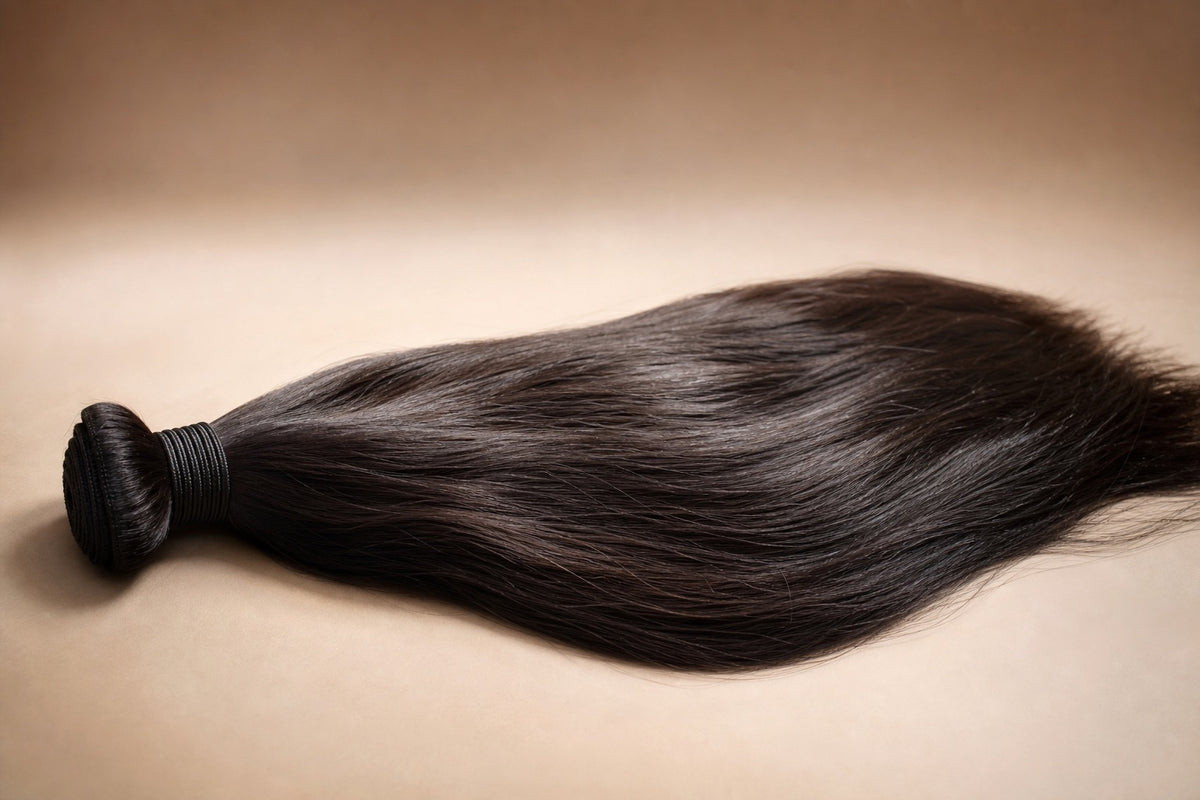
Indian Remy hair is cuticle-aligned human hair sourced from India — traditionally donated at South Indian temples as an act of worship. Because the hair is cut from a tied ponytail, the cuticles stay aligned in their natural direction, which is what makes genuine Indian Remy naturally tangle-free. At its highest grade it is raw and single-donor: collected, cleaned, and sorted without acid baths or silicone coating, so the natural texture and color stay intact.
Remy vs. virgin vs. raw — what's the difference?
These three terms get used loosely, so here's the plain-language version:
- Remy — cuticles intact and aligned. May still be lightly processed (for example, steamed for a uniform texture).
- Virgin — never chemically treated: no dye, no perm, no bleach.
- Raw — the top tier: virgin and single-donor, with no acid bath and no silicone coating. The texture is the donor's own, so it varies slightly bundle to bundle — a sign of authenticity, not a flaw.
Raw, single-donor Indian hair sits at the top because it lasts the longest and behaves most like your own hair.
How to spot real vs. fake Indian Remy hair
A few practical checks before you buy:
- The wash test. Silicone-coated "Remy" feels glassy-smooth at first, then tangles and dulls after two or three washes once the coating rinses out. Genuine cuticle-aligned hair stays smooth.
- Cuticle feel. Run your fingers from tip to root — aligned cuticles feel slightly resistant one way and smooth the other. Stripped hair feels identical both ways.
- Single-donor vs. blended. Cheap bundles mix hair from many sources, which causes uneven shedding and matting. Single-donor hair behaves consistently.
- The price red flag. If raw Indian hair is suspiciously cheap, the cuticles were almost certainly stripped — the price of genuine, cuticle-aligned, single-donor hair reflects how it is sourced and sorted.
Features of Indian Remy hair
Genuine Indian Remy hair is popular for good reason:
- Fine texture and natural bounce, so it styles easily.
- Durable — quality cuticle-aligned hair can last up to 24 months with proper care.
- Long-term value: because it is single-donor and cuticle-aligned, it stays tangle-free far longer than cheaper mixed-cuticle hair. The value is in how long it lasts and how natural it looks — not in being the cheapest option on the shelf.
- Versatile — you can color, flat-iron, and cut healthy virgin hair. It can frizz in humidity, so use a light anti-frizz product.
Types of Indian Remy hair
Indian Remy comes in several natural textures:
- Straight — silky and smooth root to tip; blends with most textures and curls easily.
- Curly — bouncy and low-effort to style; use anti-frizz products when wet.
- Wavy — the most recognized texture; versatile enough to straighten or curl.
- Deep wave — a tighter wave than wavy, naturally bouncy with added volume.
- Loose wave — softer volume; style it any way you like.
- Natural wave — a true, natural-looking wave that returns to its wavy state after washing and air-drying, even if you flat-iron it. It is our hero texture — see the Natural Virgin collection.
Why Prarvi's Indian Remy is different
Not all Indian hair is equal. Prarvi hair is single-donor and South-Indian temple-sourced, kept cuticle-aligned, and never acid-bathed or silicone-coated. That is the difference between hair that stays soft and natural for a year or more and hair that tangles after a few washes. We are based in the U.S., so salons and stylists get genuine raw Indian hair with fast shipping and no import guesswork.
Frequently Asked Questions
What is Indian Remy hair?
Hair sourced from India where the cuticles are kept intact and aligned in one direction, which reduces tangling and matting.
Is raw hair better than Remy?
Raw, single-donor hair is unprocessed and typically a higher grade; Remy hair can still be steam-processed for texture. Prarvi sells raw single-donor Indian hair.
How can I tell real quality from fake?
Look for aligned cuticles (minimal tangling), natural luster, single-donor consistency, and a reputable supplier who can document sourcing.
How long does it last?
With proper care, a year or more.
Raw vs processed hair: read the full Prarvi quality guide
Compare raw, virgin, Remy, non-Remy, silicone-coated, and synthetic hair before choosing extensions for yourself, a client, or a salon order.
